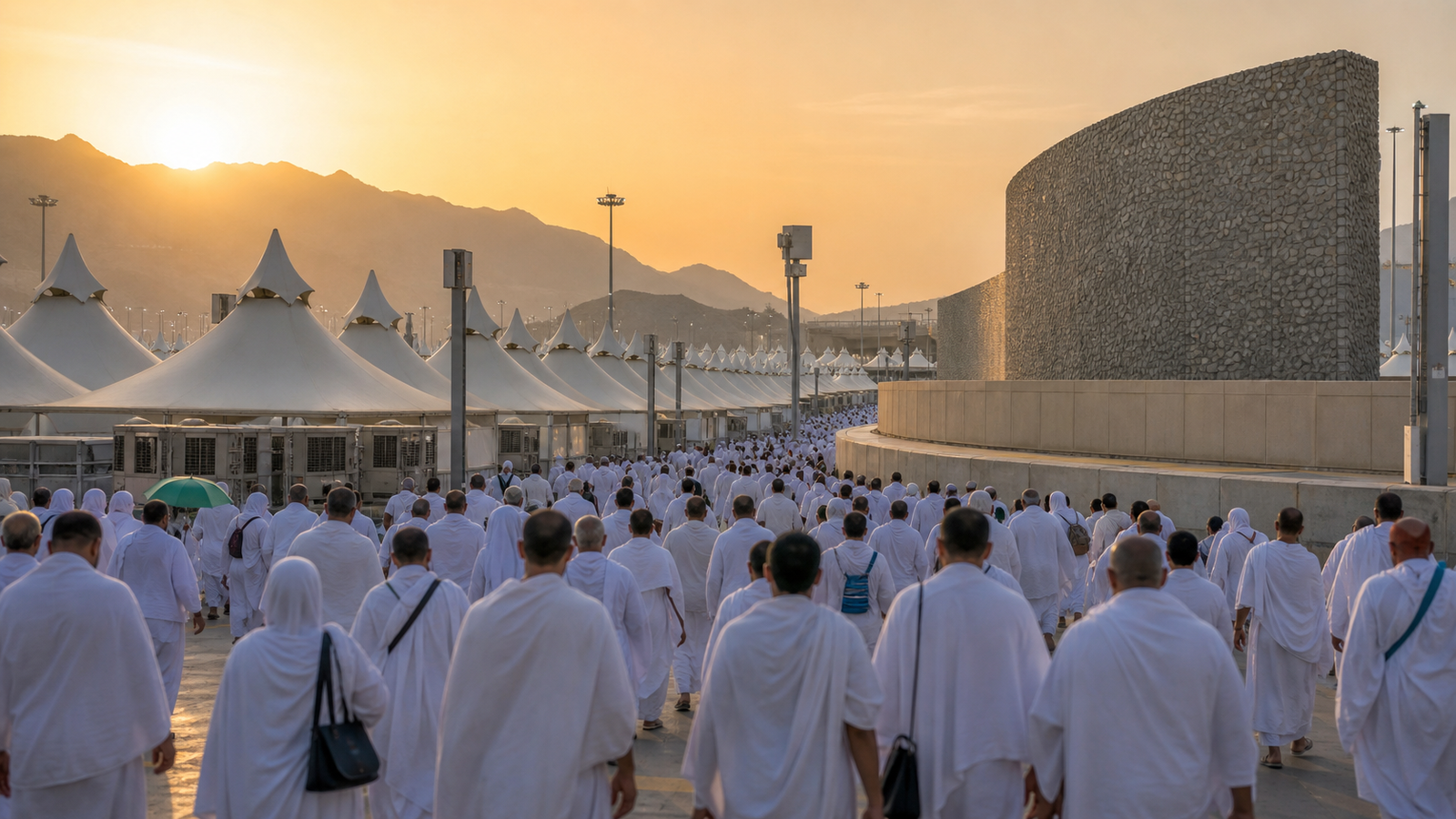
Muslim pilgrims in Saudi Arabia moved through Mina on Wednesday for the symbolic stoning ritual, one of the final stages of Hajj 2026, as Muslims around the world began celebrating Eid al-Adha.
The Associated Press reported from Mina that pilgrims threw pebbles at a large pillar in the Jamarat complex after arriving from Muzdalifah. The ritual is understood as a rejection of evil and recalls the Prophet Ibrahim's rejection of temptation.
Arab News reported that more than 1.7 million Muslims converged on Mina before dawn after spending the night in Muzdalifah. The movement from Arafat to Muzdalifah and then Mina is one of the most demanding logistical phases of the pilgrimage.
Why Mina matters in Hajj
Mina is central to several Hajj rites. Pilgrims stay in the tent city during key stages of the pilgrimage and later move to the Jamarat area for the stoning ritual. The rite follows the Day of Arafat, considered the spiritual peak of Hajj.
For Muslims not performing Hajj, Eid al-Adha marks sacrifice, charity and prayer. For pilgrims, the day is part of the closing sequence of Hajj, followed by additional rites and the days of Tashreeq.
Heat and crowd management
This year's pilgrimage has unfolded under intense heat, making crowd flow, hydration and health services especially important. Saudi authorities have expanded transport, medical and crowd-management systems in recent years after past Hajj seasons highlighted the risks of heat and congestion.
The coming days will focus on the remaining stoning rituals, movement back toward Makkah and the safe departure of pilgrims after completing their rites.
Sources
- Associated Press: Pilgrims perform Hajj rituals under intense heat as Eid al-Adha begins
- Associated Press: Pilgrims converge on Mount Arafat
- Arab News: Hajj pilgrims converge on Mina as Eid begins
- Saudi Gazette: Saudi Arabia records 1.7 million pilgrims for Hajj 2026
Also read
Quad critical minerals push gives India a larger supply-chain role