Quick summary
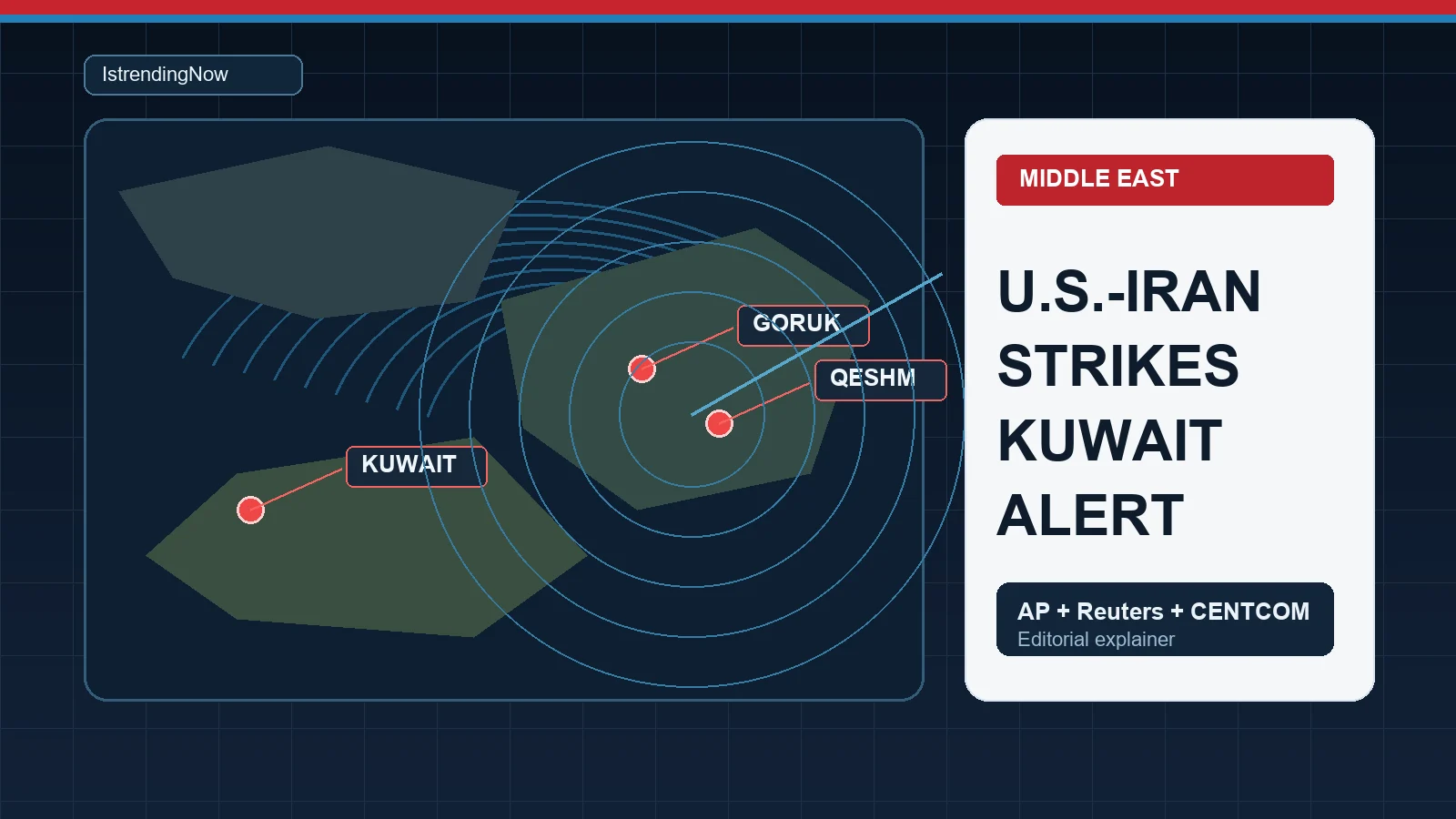
- CENTCOM said U.S. forces conducted self-defense strikes on Iranian radar and drone command-and-control sites in Goruk and on Qeshm Island.
- AP and Reuters reported that Iran acknowledged a retaliatory strike, while Kuwait said its air defenses were intercepting incoming drone and missile fire.
- The exchange matters because Kuwait hosts major U.S. military facilities and the wider Gulf remains tied to Strait of Hormuz shipping risk.
The United States and Iran have reported a fresh exchange around the Gulf, putting Kuwait and regional air-defense systems back in focus just as diplomats try to keep a fragile ceasefire alive.
U.S. Central Command said it carried out self-defense strikes over the weekend on Iranian radar and drone command-and-control sites in Goruk and on Qeshm Island. CENTCOM said the action followed what it described as Iranian aggression, including the shootdown of a U.S. MQ-1 drone over international waters.
AP reported Monday that Iran acknowledged launching a retaliatory strike, while Kuwait said its air defenses opened fire to intercept incoming drone and missile attacks. Reuters also reported that Iran's Revolutionary Guard said it had targeted an air base used by the U.S., without identifying the base.
What CENTCOM says it hit
The U.S. military's public statement names two locations: Goruk, Iran, and Qeshm Island. The stated targets were radar and command-and-control sites linked to drones. CENTCOM said U.S. aircraft eliminated Iranian air defenses, a ground control station and two one-way attack drones that it said threatened ships moving through regional waters.
No American service members were harmed, according to CENTCOM. Iran has framed its response as retaliation for the attack on southern Iran, while Kuwait's reports focused on air-defense activity and incoming fire.
Why Kuwait is central
Kuwait is not only a nearby Gulf state. It hosts U.S. Army Central and other U.S.-linked military infrastructure, making it a potential pressure point when Tehran wants to signal that American regional basing carries a cost.
That is why even limited intercept reports matter. If missiles or drones move toward Kuwait, the story becomes less about a single strike and more about whether Gulf hosts, U.S. logistics networks and commercial shipping lanes can stay insulated from the U.S.-Iran conflict.
Why it matters
The exchange shows how easily the ceasefire can be strained by drone incidents, air-defense strikes and retaliation near U.S. bases. It also keeps the Strait of Hormuz risk premium alive for energy markets and shipping insurers.
The Hormuz link
Qeshm Island sits near the Strait of Hormuz, the narrow Gulf chokepoint through which a large share of global oil and gas trade historically moved. Any fighting tied to radar, drones or shipping threats near that corridor can quickly become a market story as well as a military one.
For now, the public record supports a cautious reading: CENTCOM confirms U.S. strikes on Iranian drone-related infrastructure; AP and Reuters report Iranian retaliation and Kuwaiti air-defense intercepts; neither side is describing a durable collapse of ceasefire talks yet.
What happens next
Watch three signals: whether Kuwait releases more detail on interceptions or damage, whether CENTCOM adds operational updates, and whether U.S.-Iran negotiators keep talking despite another exchange of fire. The most important market signal remains whether shipping through Hormuz faces new delays, fees or military risk.
Sources and references
- U.S. Central Command: U.S. defends, disables threats in response to Iranian aggression
- Associated Press: U.S. bombs Iranian military sites and Kuwait is hit by drone and missile fire
- Reuters via Investing.com: U.S. says it struck Iranian military sites, Tehran responds with air base attack
- Reuters via The Guardian: Iran targets American base after U.S. strikes Iranian air defenses
What happens next
The next few hours matter more than the first headlines. A confirmed damage report, a second wave of strikes, or a pause in negotiations would each change the risk picture quickly.