Quick summary
- Firstpost reported that U.S. strikes hit around Bandar Abbas as tensions rose near the Strait of Hormuz.
- CBS News and Reuters-linked reporting said U.S. action targeted an Iranian military site and drones, though full operational details remain limited.
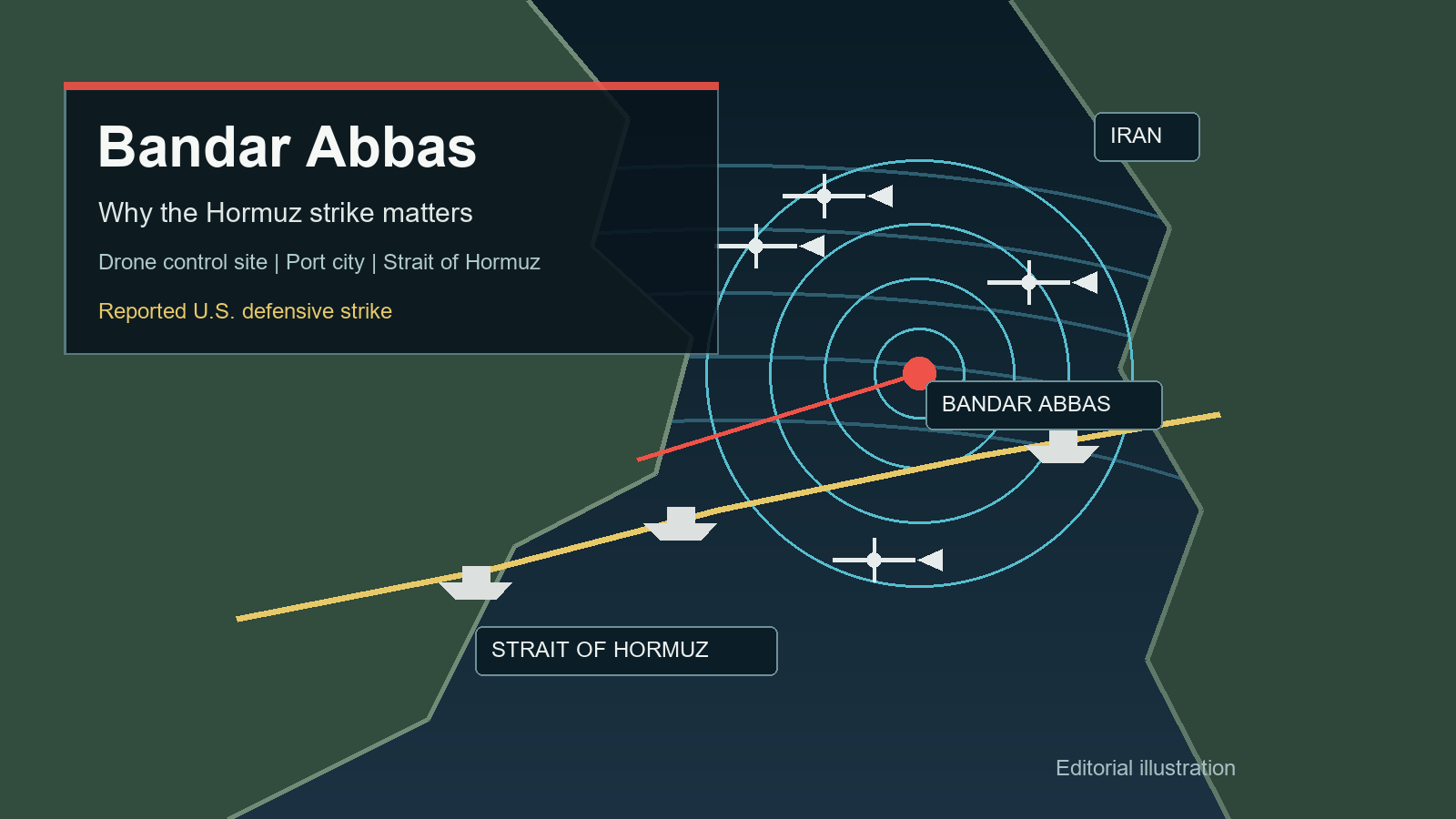
- The location matters because Bandar Abbas is close to Hormuz, a narrow route central to global oil shipping.
A Firstpost video report has put Bandar Abbas at the centre of the latest U.S.-Iran escalation, describing U.S. strikes around the Iranian port city as tensions erupt near the Strait of Hormuz.
The claim fits a wider stream of reporting from major outlets. CBS News reported that the United States carried out new strikes against an Iranian military site, citing a U.S. official. Reuters-linked reporting carried by MarketScreener said U.S. action targeted a military site and drones. Those reports did not provide every operational detail publicly, so exact damage claims should still be treated with caution.
Bandar Abbas is not just another point on a map. It is one of Iran's most important southern port cities and sits close to the Strait of Hormuz, the narrow waterway through which a significant share of the world's seaborne oil passes. That geography is why any strike report around the city gets immediate attention from governments, shipping companies and energy markets.
Why Bandar Abbas matters
Bandar Abbas has commercial, military and symbolic weight. It is connected to port activity, naval presence and the wider Gulf security picture. If drones, missile systems or command facilities around the area are targeted, the story quickly becomes larger than one city.
The Strait of Hormuz is the key reason. Even when tankers continue moving normally, military action near the strait can raise market fears. Traders watch for signs of shipping disruption, higher insurance costs, naval warnings or threats from either side to widen the confrontation.
What is confirmed and what is not
What is confirmed from available reporting is that serious outlets are citing U.S. official accounts of new action against Iranian military targets and drones. AP has also tracked the wider market and political reaction, including oil-price movement and concern over retaliation.
What is not fully confirmed in public is the complete target list, the level of damage and whether all claims made in live television coverage will match later official accounts. That is why this article treats the video as a news lead, then anchors the explanation in additional reporting.
What happens next
The next stage depends on whether Washington and Tehran signal that the latest exchange is complete. If both sides stop at statements, markets may calm. If either side announces a fresh strike, base alert, naval movement or Hormuz-related warning, the crisis can move quickly again.
For readers, the main things to watch are official U.S. and Iranian statements, oil prices, shipping advisories and whether diplomatic intermediaries try to re-open a pause.
Sources and references
- Firstpost video report: U.S. strikes Bandar Abbas as Strait of Hormuz tensions rise
- CBS News: U.S. carries out new strikes against Iranian military site, official says
- Reuters via MarketScreener: U.S. strikes in Iran against a military site and drones
- AP News: oil and market reaction to the U.S.-Iran escalation
Why it matters
Bandar Abbas sits close to the Strait of Hormuz, so any military action around the city can quickly become a global energy and shipping story, not only a bilateral U.S.-Iran story.
What happens next
Watch for official confirmations, oil-price movement, shipping advisories and whether either side describes the exchange as finished or promises another response.