Quick summary
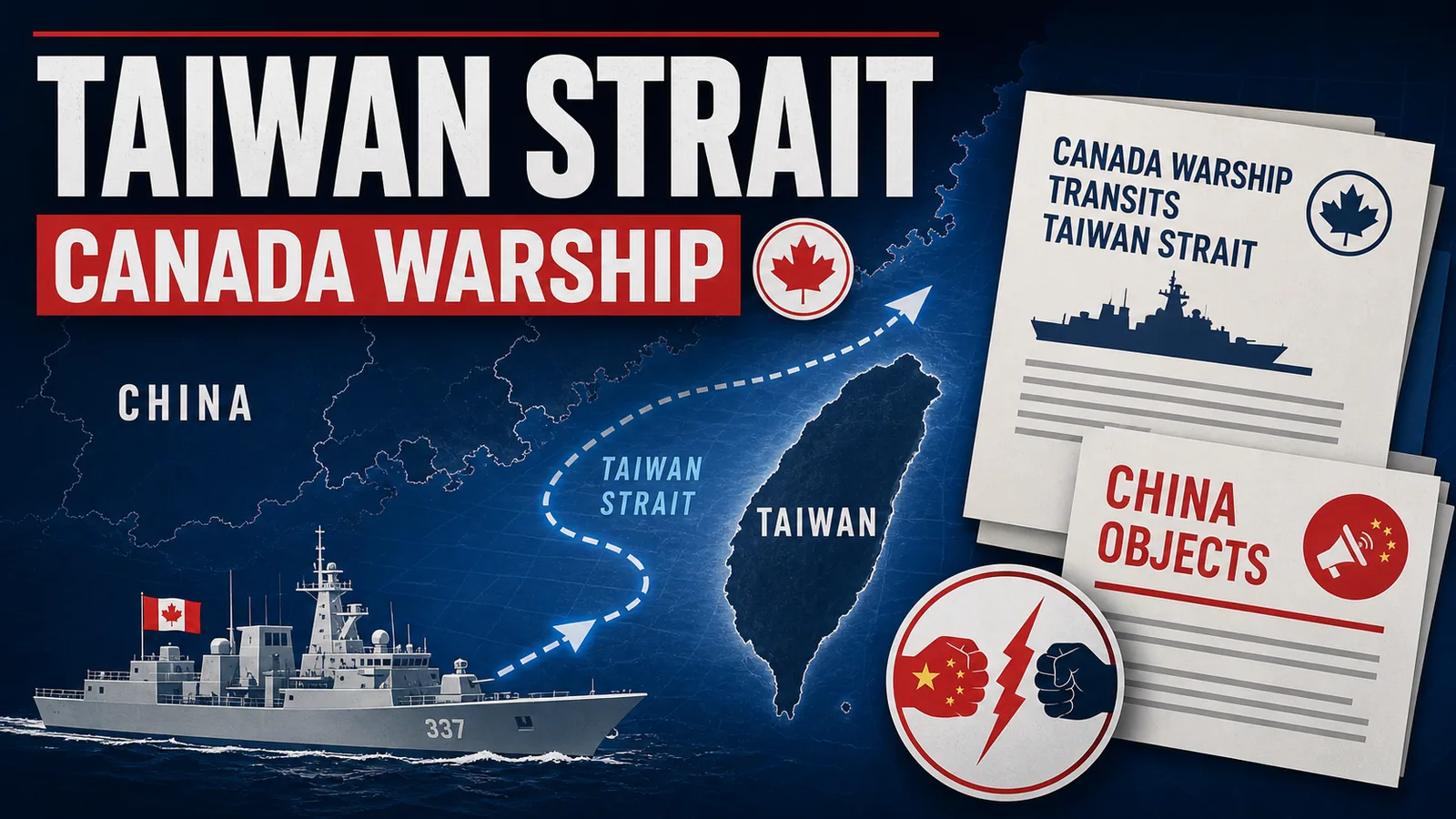
- Canada's HMCS Charlottetown transited the Taiwan Strait, according to Reuters and regional reports.
- China objected to the passage, saying foreign naval moves in the waterway send the wrong signal.
- The transit matters because allied navies use the strait to signal that they view it as an international waterway, while Beijing claims Taiwan as part of China.
A Canadian warship's passage through the Taiwan Strait has put the waterway back in the Indo-Pacific spotlight, with Beijing criticising the move and Ottawa framing it as routine navigation.
Reuters reported that the Canadian frigate HMCS Charlottetown transited the strait, a narrow but strategically important route between Taiwan and mainland China. Similar passages by U.S. and allied navies have often drawn objections from Beijing.
China says Taiwan is part of its territory and objects to foreign military activity that it believes encourages Taipei or challenges Beijing's claims. Taiwan rejects China's sovereignty claim and says only its people can decide the island's future.
Why the Taiwan Strait matters
The Taiwan Strait is one of the world's most sensitive maritime corridors. It is important for shipping, military signalling and the wider balance between China, Taiwan, the United States and allied partners.
For Canada, the transit fits a broader Indo-Pacific posture: showing presence with allies and supporting freedom of navigation. For China, the passage is seen through the lens of sovereignty and foreign military pressure near its coast.
Why it matters
Each transit is small by itself, but repeated passages create a pattern. They signal that Western and partner navies do not accept Beijing's effort to treat the strait as a closed security zone.
What happens next
Watch for China's military or coast guard response, Canada's official readout, and whether other allied ships conduct similar transits in the coming weeks.
Sources and references
- Reuters via MarketScreener: China objects to freedom-of-navigation framing
- Taipei Times: Canada sends frigate through Taiwan Strait
- Government of Canada: Operation Horizon Indo-Pacific deployment overview
What happens next
The next signal is whether Beijing limits its response to statements or follows with military tracking activity, and whether Ottawa issues a detailed operational readout.