Quick summary
- Firstpost's Vantage report says U.S. filings raise questions about Pakistan army chief Asim Munir's Operation Sindoor ceasefire claim.
- Indian media reports say lobbying records show Pakistan's outreach to Washington during or after the crisis.
- The careful reading: the filings do not settle every political claim, but they do add public-record evidence to the timeline.
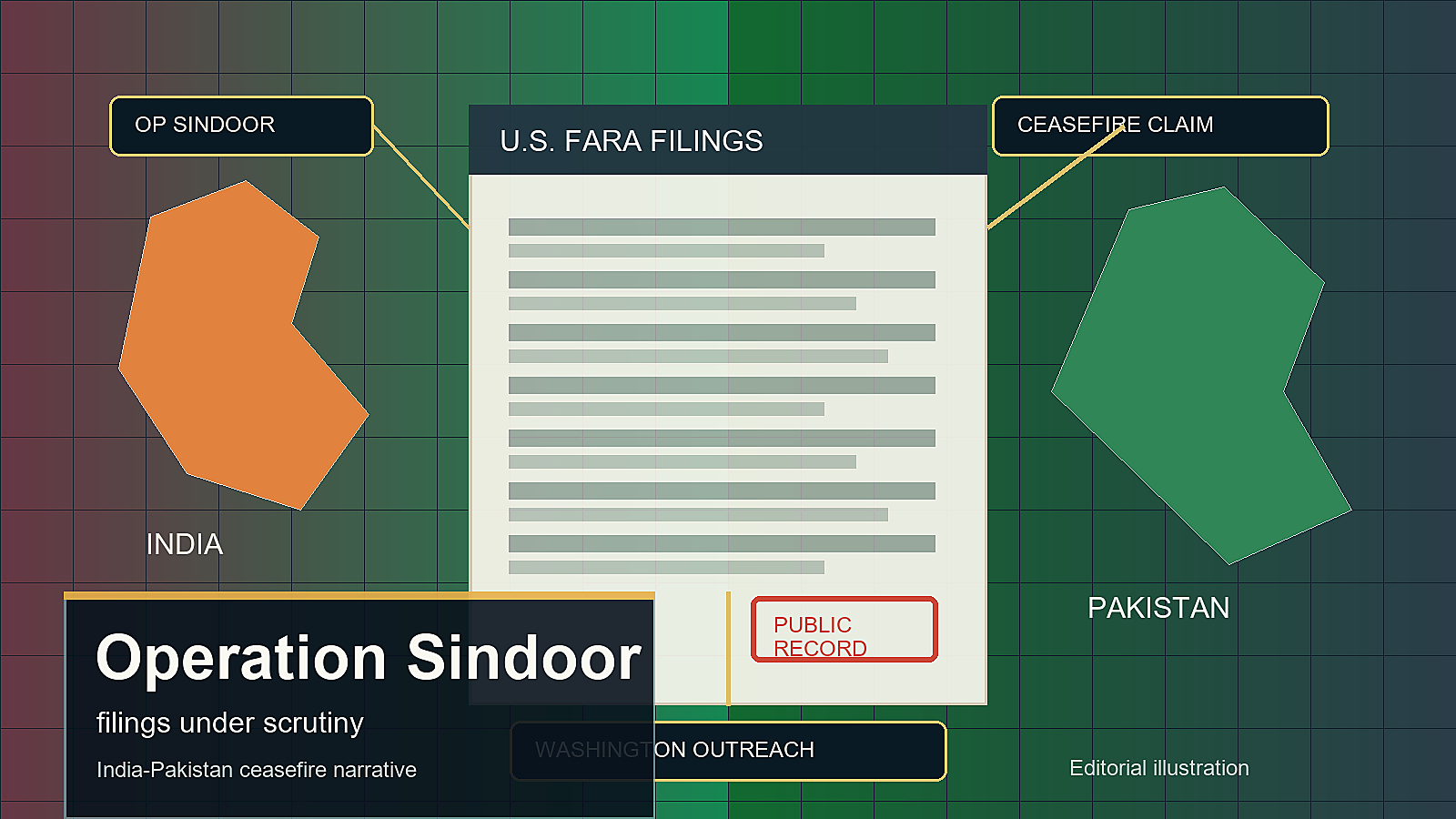
A Firstpost Vantage video has pushed Operation Sindoor back into public debate, arguing that U.S. filings undercut Pakistan army chief Asim Munir's account of how the ceasefire narrative unfolded.
The report focuses on records connected to Pakistan's outreach in Washington. The Times of India reported that U.S. lobbying records contradicted Munir's claim about Operation Sindoor, while NDTV reported separately that documents showed Pakistan running to the U.S. for help during the episode.
The point is politically sensitive, so it needs careful wording. Public filings can show who contacted whom, when lobbying activity happened, and what issues were presented. They do not, by themselves, prove every behind-the-scenes conversation or every military claim. But they can test public narratives against a dated paper trail.
What the dispute is about
Operation Sindoor became a major India-Pakistan flashpoint, and both sides have framed the episode in ways that support their domestic and diplomatic positions. Pakistan's military leadership has presented its own version of events, while Indian commentary has argued that Pakistan's public claims do not match the diplomatic record.
The latest Firstpost segment says the U.S. record matters because it shows Pakistan was seeking support or intervention in Washington, a detail that can sit awkwardly beside claims of strength or control during the crisis.
Why the filings matter
Foreign lobbying disclosures are not ordinary political gossip. They are public compliance records in the United States, usually filed under rules that require foreign principals and their representatives to disclose certain activity. That makes them useful for reconstructing diplomatic timelines.
The Wire has also reported more broadly on how lobbying and outreach can shape India-U.S. diplomatic visibility. In this case, the core question is narrower: whether Pakistan's public messaging about Operation Sindoor matches the documented outreach around Washington.
Hindi quick brief
इस रिपोर्ट का मुख्य मुद्दा यह है कि अमेरिका में दर्ज लॉबिंग रिकॉर्ड पाकिस्तान की Operation Sindoor वाली कहानी पर सवाल उठाते हैं. रिकॉर्ड हर दावे को अंतिम रूप से साबित नहीं करते, लेकिन वे यह दिखाते हैं कि संकट के दौरान वॉशिंगटन में किस तरह की कूटनीतिक कोशिशें हुईं.
What happens next
This story will likely stay in the India-Pakistan information battle. Watch for whether Indian officials cite the filings more directly, whether Pakistan responds to the record, and whether more documents from Washington become part of the debate.
Sources and references
- Firstpost Vantage video: PM Modi's nuclear message and Operation Sindoor claims
- The Times of India: U.S. lobbying records and Asim Munir's ceasefire claim
- NDTV: documents and Pakistan's outreach to the U.S. during Operation Sindoor
- The Wire: lobbying records and India-U.S. diplomatic visibility
- U.S. Department of Justice: Foreign Agents Registration Act resources
Why it matters
Operation Sindoor is now being fought not only through military claims, but through documents, timelines and diplomatic records. That makes the public paper trail important for readers trying to separate messaging from evidence.
What happens next
Look for official responses from India and Pakistan, further reporting on U.S. filings, and whether the debate becomes part of the wider national-security narrative in both countries.