Quick summary
- Reuters reported survivor accounts from people fleeing violence around al-Fashir in Sudan's North Darfur region.
- AP and UN-linked reports have warned of attacks, displacement and severe civilian risk around the city.
- The story matters because al-Fashir has become one of the most closely watched fronts in Sudan's war.
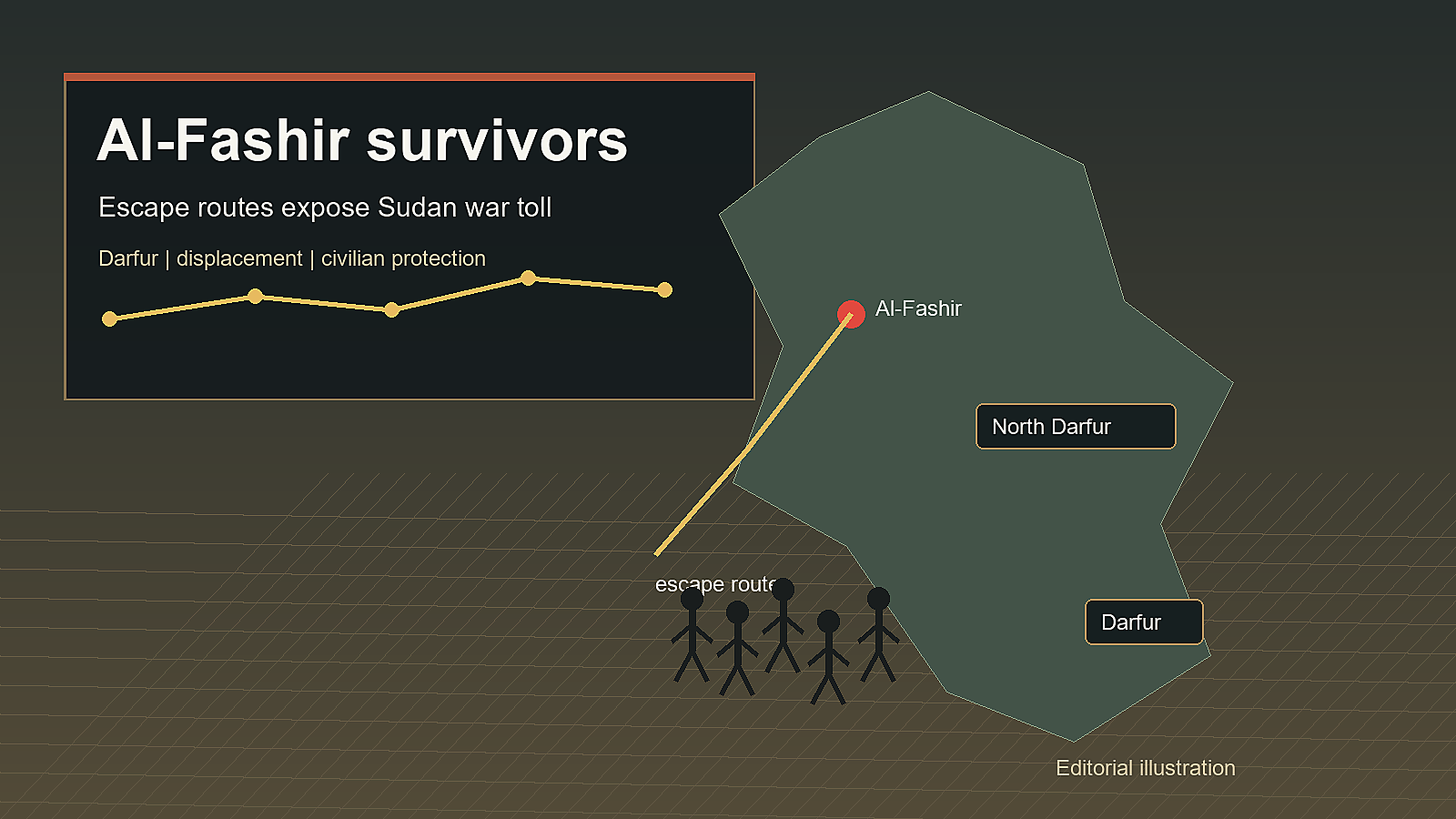
Survivor accounts from Sudan's al-Fashir are bringing fresh attention to the civilian cost of the war in Darfur, where people fleeing violence describe dangerous escape routes and deepening humanitarian pressure.
Reuters reported survivor testimony from people who escaped after an attack around al-Fashir, the capital of North Darfur. The report adds a human layer to a crisis that aid groups and UN officials have been warning about for months: civilians are not only facing fighting, but also hunger, displacement and limited routes to safety.
Al-Fashir matters because it has been a major urban centre in Darfur and a focal point in the conflict between Sudan's army and the Rapid Support Forces. When fighting intensifies there, it can push large numbers of people into displacement camps or remote routes with little protection.
What the latest reports show
The Reuters survivor report describes people escaping amid fear and violence. Earlier AP reporting from Darfur also documented deadly attacks linked to the Rapid Support Forces, including strikes on civilian spaces such as a charity kitchen.
UN-linked material has warned that an offensive around al-Fashir could expose civilians to serious harm. The concern is not only battlefield control. It is whether families can leave safely, whether aid can reach those who remain, and whether displaced people can find food, water and medical care.
Why it matters
Sudan's war can sometimes disappear from the top of global news feeds, but the humanitarian consequences are still expanding. Darfur has already seen years of displacement and trauma. Renewed fighting around al-Fashir risks adding another layer to that crisis.
For readers outside Sudan, the key point is this: a city battle can become a regional humanitarian emergency when civilians have few safe exits and aid workers cannot move freely.
What happens next
Watch for three signals: whether fighting around al-Fashir intensifies, whether humanitarian corridors or aid access improve, and whether international pressure on the warring sides produces any practical protection for civilians.
Until then, survivor accounts are likely to remain one of the clearest ways the outside world sees what the conflict is doing on the ground.
Sources and references
- Reuters via Internazionale: survivors of al-Fashir attack describe escape from Sudan
- AP News: attack in Sudan's Darfur region and civilian toll
- UN Sudan briefing material on al-Fashir risk and civilian protection
Why it matters
Al-Fashir is a civilian protection test for Sudan's war. If people cannot safely leave or receive aid, the battle becomes a humanitarian emergency beyond the front line.
What happens next
Look for updates on aid access, displacement numbers, fighting around North Darfur, and international pressure for civilian corridors.