Quick summary
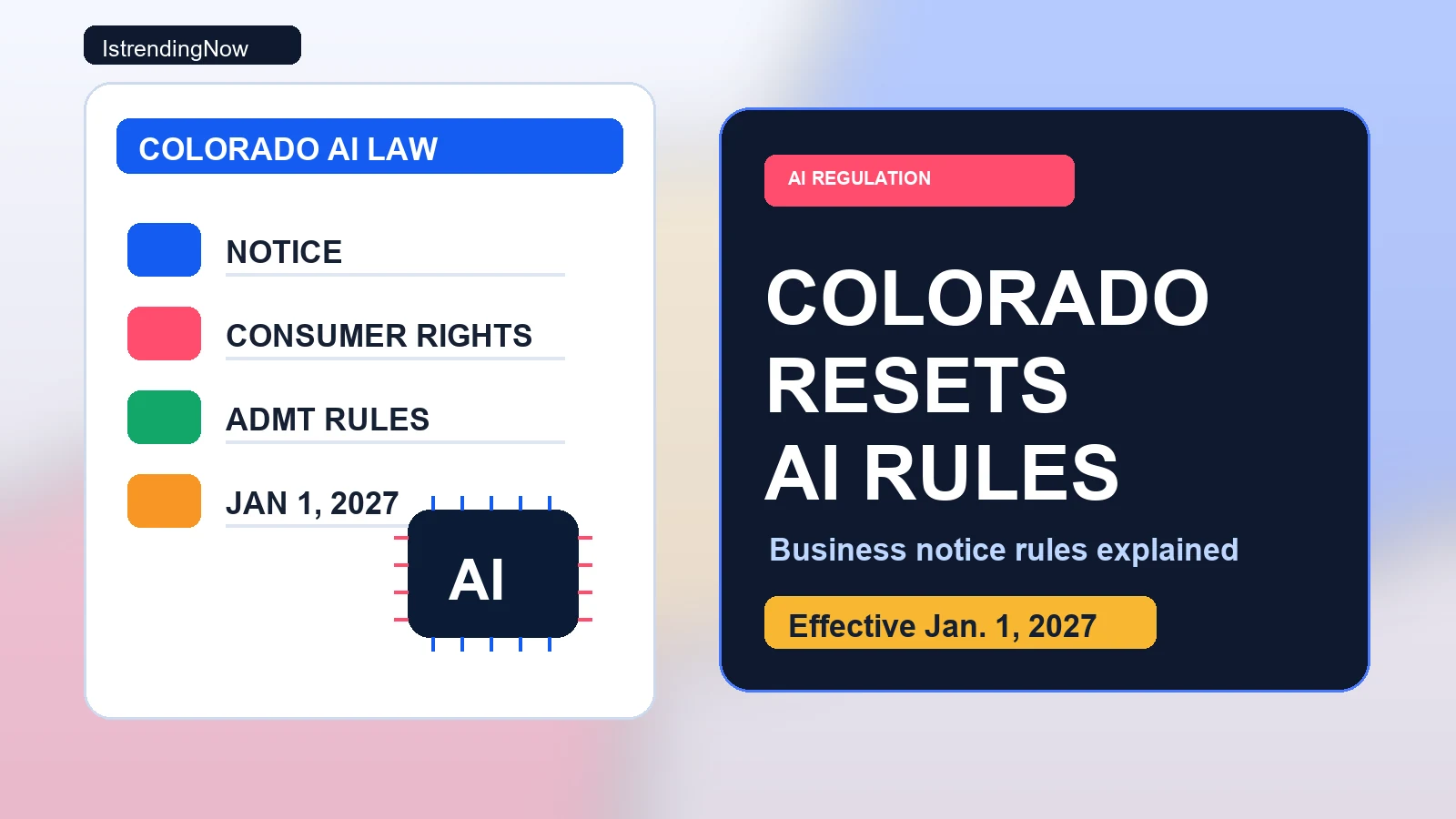
- Colorado Senate Bill 26-189 became law on May 14, replacing the state's earlier broad AI Act before that older framework took effect.
- The new law is narrower and focuses on automated decision-making technology, or ADMT, used in consequential decisions.
- The main effective date is January 1, 2027, giving the Colorado Attorney General time to clarify disclosure and enforcement rules.
Watch the Short
This quick IstrendingNow Short summarizes the Colorado AI notice law and the 2027 date businesses should track.
Colorado has reset one of the most closely watched U.S. state AI laws, replacing a broader artificial-intelligence framework with a narrower law focused on automated decision-making in high-impact areas of life.
The Colorado General Assembly lists Senate Bill 26-189, Automated Decision-Making Technology, as signed into law on May 14, 2026. The law replaces the earlier Colorado AI Act framework that had been watched by companies using AI in hiring, education, housing, lending, insurance, health care and other consequential decisions.
The practical shift is simple: instead of trying to regulate a wide category of high-risk AI systems, Colorado is now focusing on when businesses use automated decision-making technology to materially influence decisions that affect real consumer opportunities.
What changed
The old framework drew heavy business and legal pushback because it placed broader obligations on developers and deployers of high-risk AI systems. The new law narrows the target to ADMT used in consequential decisions and puts more emphasis on consumer notice and rights.
Legal summaries from firms tracking the law say the reset removes several broader duties from the 2024 law and makes Colorado's approach more targeted. The official bill page confirms the new bill's status as law and provides the signed act text for the final language.
Who should pay attention
The clearest audience is any business or organization using automated systems to help decide access to jobs, housing, education, financial services, insurance, health care or similar important opportunities for Colorado consumers.
For users, the important point is transparency: if a system is helping influence a major decision, the law moves Colorado toward clearer notice and rights around that use. For businesses, the important point is preparation: the effective date is 2027, but implementation details and Attorney General rulemaking will shape compliance.
Why it matters
Colorado is still one of the most important U.S. state AI-policy tests. Even after narrowing the law, the state is setting a template that other states, employers, lenders, schools and AI vendors will study closely.
Why this is bigger than Colorado
AI regulation in the United States is still fragmented. Federal policy, state laws, lawsuits and industry pressure are all moving at once. Colorado's reset shows the tension clearly: lawmakers want consumer protection, while businesses want rules that are narrow enough to implement.
That makes the law useful even for readers outside Colorado. It shows where AI regulation may go next: less about banning AI outright, more about notice, accountability and consumer rights when automated systems influence consequential decisions.
What happens next
The next phase is rulemaking and compliance planning. Watch the Colorado Attorney General's office for guidance, disclosure requirements and enforcement details. Businesses should also track whether other states borrow the Colorado model or choose stricter approaches.
Sources and references
- Colorado General Assembly: SB26-189 Automated Decision-Making Technology
- Colorado Attorney General: AI and anti-discrimination rulemaking page
- Axios Denver: Colorado lawmakers introduce new AI rules
- DLA Piper: Colorado pulls back on AI regulation
- Greenberg Traurig: Colorado repeals and replaces the Colorado AI Act
What happens next
The big date to watch is January 1, 2027. Before then, companies should follow Attorney General guidance and review whether their automated tools influence covered decisions.