Quick summary
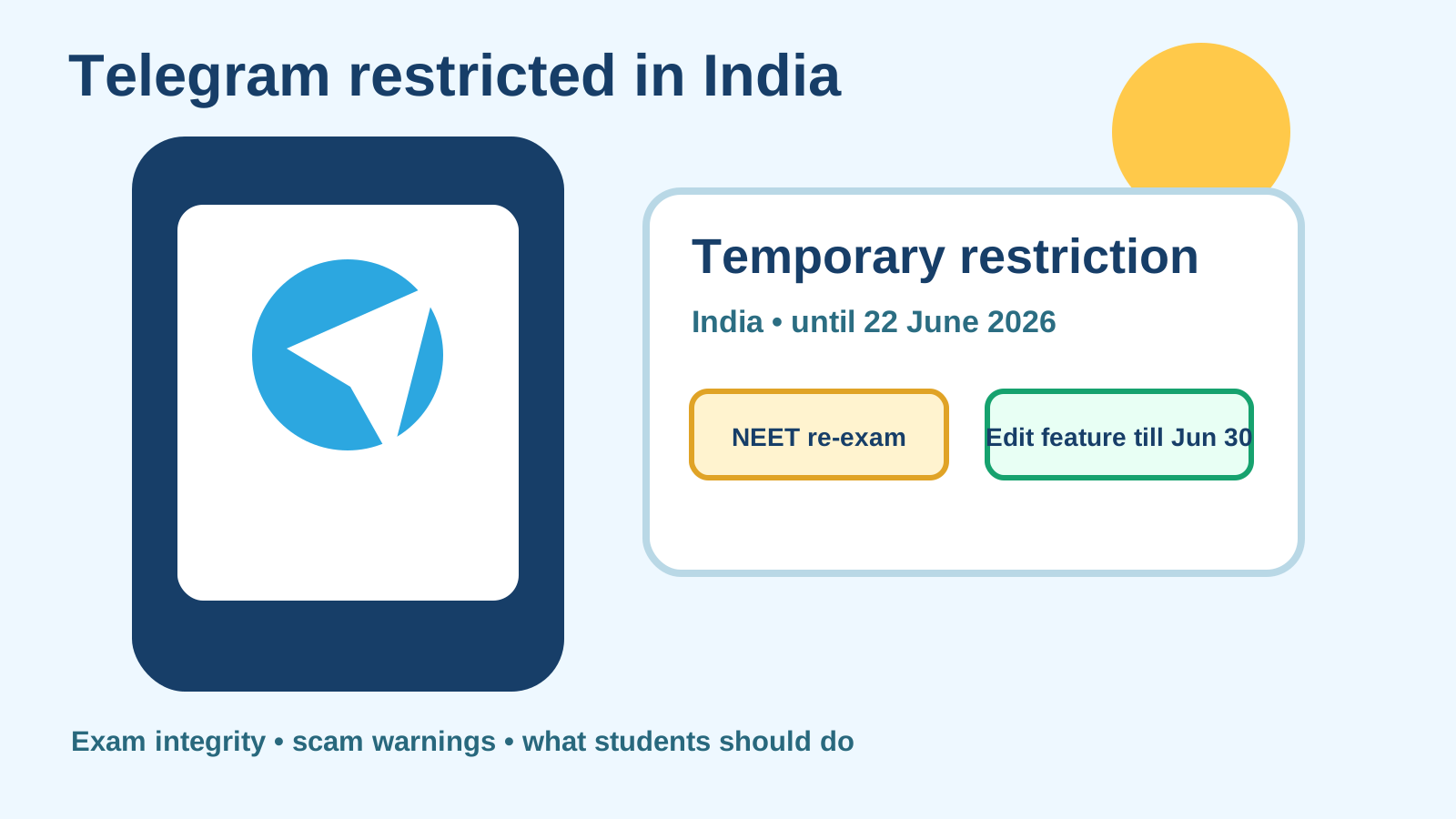
- Telegram access in India has been restricted until June 22, 2026, according to an NTA press release.
- The action is linked to the NEET-UG 2026 re-examination scheduled for June 21.
- Telegram's ability to edit already-posted messages in India is separately disabled until June 30, 2026.
- NTA says cheating rackets used Telegram channels, groups and bots to defraud candidates with fake or misleading paper-leak claims.
What exactly has been restricted?
The NTA statement says MeitY issued a direction under Section 69A of the Information Technology Act, 2000, restricting access to the Telegram platform in India for a defined period ending June 22. A separate direction requires Telegram to disable, in India, the editing of already-posted messages until June 30.
That distinction matters. The access restriction is tied to the re-examination window and its immediate aftermath. The editing-feature direction lasts longer because NTA says that feature was used to create after-the-event screenshots and files that looked like prior paper-leak evidence.
Why did the government act?
NTA says the action follows organised use of Telegram by cheating rackets targeting NEET-UG 2026 candidates. According to the agency, fraudulent channels, groups and bots openly advertised fake access to the re-examination paper and attempted to collect money from anxious candidates.
The agency also credited the Indian Cyber Crime Coordination Centre, state law-enforcement agencies and MeitY with coordinated takedowns of Telegram channels, groups and bots before the wider platform-level restriction.
Important for students and parents
NTA says there is no re-examination paper available outside the secured examination chain. Any group selling a paper, answer key or “confirmed leak” should be treated as a fraud risk.
How the message-editing issue works
Telegram allows channel administrators to edit older posts. NTA says this has been misused in recent examinations: a harmless older message can be edited after an exam to insert a question paper or PDF while the original timestamp remains. That can make a fake leak look as if it existed before the exam.
This does not mean every Telegram study group is fraudulent. NTA acknowledged that lakhs of people use Telegram for legitimate personal, educational and professional purposes and said it regrets the inconvenience. The agency described the measure as calibrated and bounded in time.
What users may notice
| User situation | Likely effect |
|---|---|
| General Telegram user in India | The app or web service may be inaccessible depending on network implementation. |
| Student using Telegram for study material | Use official NTA channels and saved offline material; do not trust paper-sale groups. |
| Channel administrator | Already-posted message editing is restricted in India until June 30. |
| Business or community group | Prepare backup communication through email, WhatsApp, website notices or SMS. |
What NEET candidates should do now
- Use the official NTA and NEET websites for admit card, exam city, instructions and updates.
- Do not pay any Telegram, WhatsApp or social-media group claiming to sell the paper.
- Screenshot and report suspicious groups instead of engaging with them.
- Check exam-centre instructions early and keep important documents offline.
- Tell friends not to forward “leaked paper” PDFs or edited screenshots.
The bigger debate
The move will also trigger debate about proportionality because the restriction affects many legitimate users. Supporters will argue that a high-stakes national examination needs extraordinary controls when fraud networks exploit a platform's features. Critics will argue that platform-level blocking disrupts ordinary users and may not address the deeper causes of exam fraud.
For now, the most accurate reading is narrow: the restriction is temporary, exam-specific and tied to alleged cheating networks around NEET-UG 2026.