Quick summary
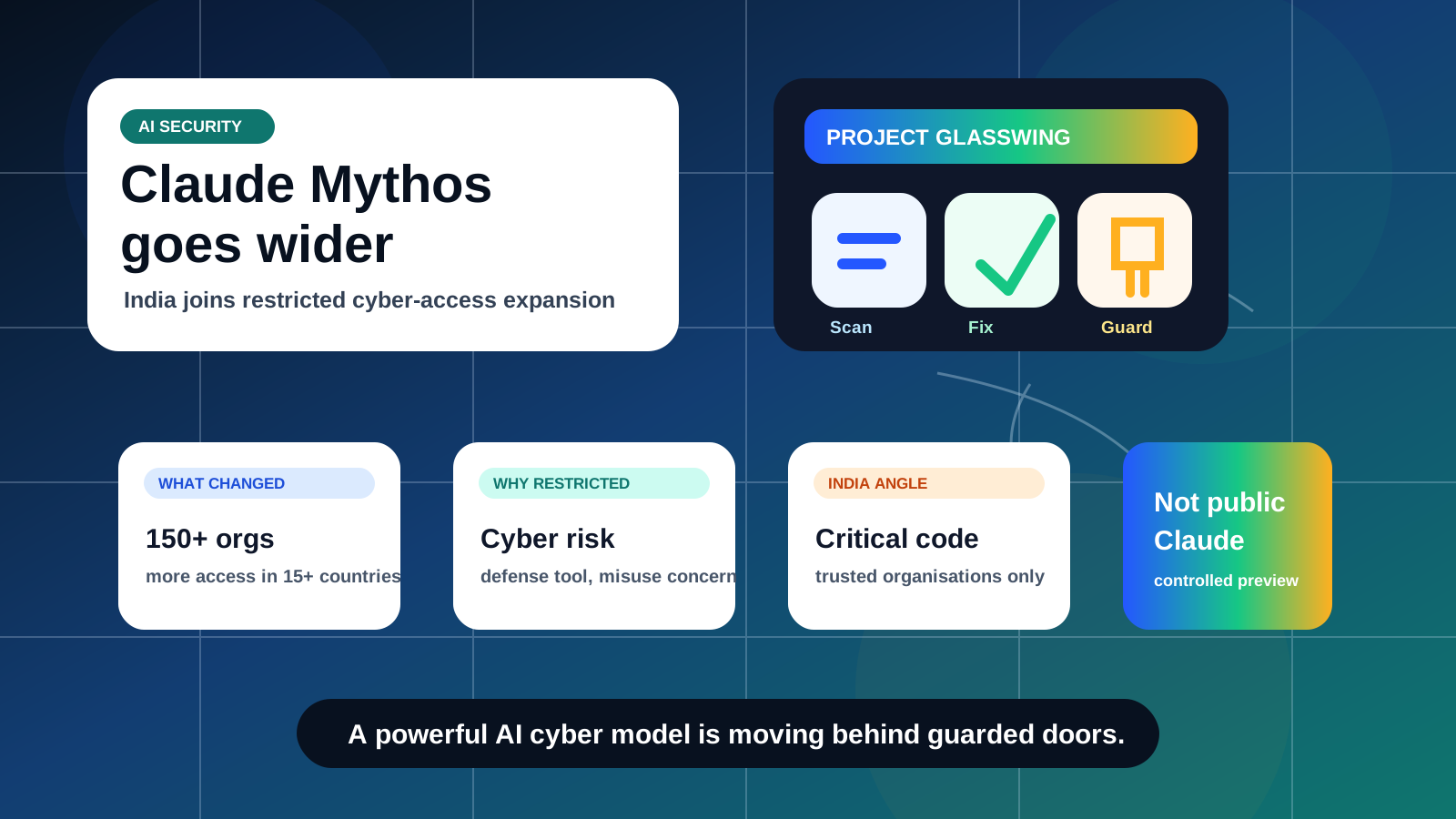
- Anthropic said on June 2 that Project Glasswing is expanding to more than 150 organisations across more than 15 countries.
- The initiative gives selected trusted organisations access to Claude Mythos Preview for defensive cybersecurity work.
- India’s inclusion matters because AI-assisted vulnerability discovery is becoming a national-security and critical-infrastructure issue.
Watch the Firstpost segment
The video helped flag the India angle. This article cross-checks the topic with Anthropic’s official Project Glasswing pages and current technology reporting.
Anthropic’s Claude Mythos Preview is not a normal public AI launch. It sits inside Project Glasswing, an initiative Anthropic describes as a way to secure critical software using its most capable model yet. The model is being made available to selected partners for defensive work, especially finding and fixing vulnerabilities in important codebases.
On June 2, 2026, Anthropic said it was expanding Project Glasswing after an initial group of roughly 50 partners began using Claude Mythos Preview to scan codebases for vulnerabilities. The expansion adds more than 150 organisations across more than 15 countries, according to the company.
What is Claude Mythos Preview?
Claude Mythos Preview is Anthropic’s restricted frontier model for advanced software and cybersecurity work. Anthropic’s Project Glasswing page says the initiative is powered by Claude Mythos Preview and is meant to help secure critical software for the AI era.
The key point is that Mythos is not being broadly released to consumers. Anthropic is treating access as controlled because the same capabilities that help defenders find vulnerabilities could also make cyberattacks faster, more frequent or harder to predict if misused.
The simple takeaway
This is not just “India gets a new AI model.” It is a sign that powerful AI cyber tools are moving into a guarded-access phase, where governments, critical infrastructure and trusted companies may get defensive access before the public does.
Why India matters
India is a major software, cloud, finance, telecom and digital-public-infrastructure market. If selected Indian organisations get access through Project Glasswing, the practical value is defensive: scanning important software, improving cyber readiness and learning how advanced AI changes vulnerability discovery.
The India angle also matters politically. Countries do not want to depend only on foreign companies for cyber defense, but they also need access to the newest AI safety and security techniques. Project Glasswing sits directly inside that tension.
Why Anthropic is controlling access
Anthropic says many other AI companies may develop Mythos-class models within months, and some may release them without the same misuse safeguards. That is why Project Glasswing is being framed as a way to learn from controlled defensive use before the wider AI ecosystem reaches similar capability.
Technology reporting from TechCrunch also notes that the expanded group includes organisations in countries friendly to the United States, including India, Japan, South Korea, Australia, Canada and several European countries.
What could go wrong?
The concern is dual use. A model good at finding vulnerabilities can help patch critical bugs, but similar capability in the wrong hands could help attackers find weak points. That is why access control, auditing, vendor security and responsible disclosure become central parts of the story.
What happens next
Watch for three things: whether Anthropic names more participating organisations, whether public Mythos-class models appear later in 2026, and whether governments create rules for AI systems that can independently discover cyber vulnerabilities.
What happens next
- More trusted organisations may be added to Project Glasswing.
- Governments may push for access to test public-sector and critical-infrastructure systems.
- AI labs may face stronger pressure to define safety rules for cyber-capable models.