Quick summary
- President Donald Trump signed the AI order on June 2, 2026.
- The order directs agencies to create a classified benchmark for advanced cyber capabilities in AI models.
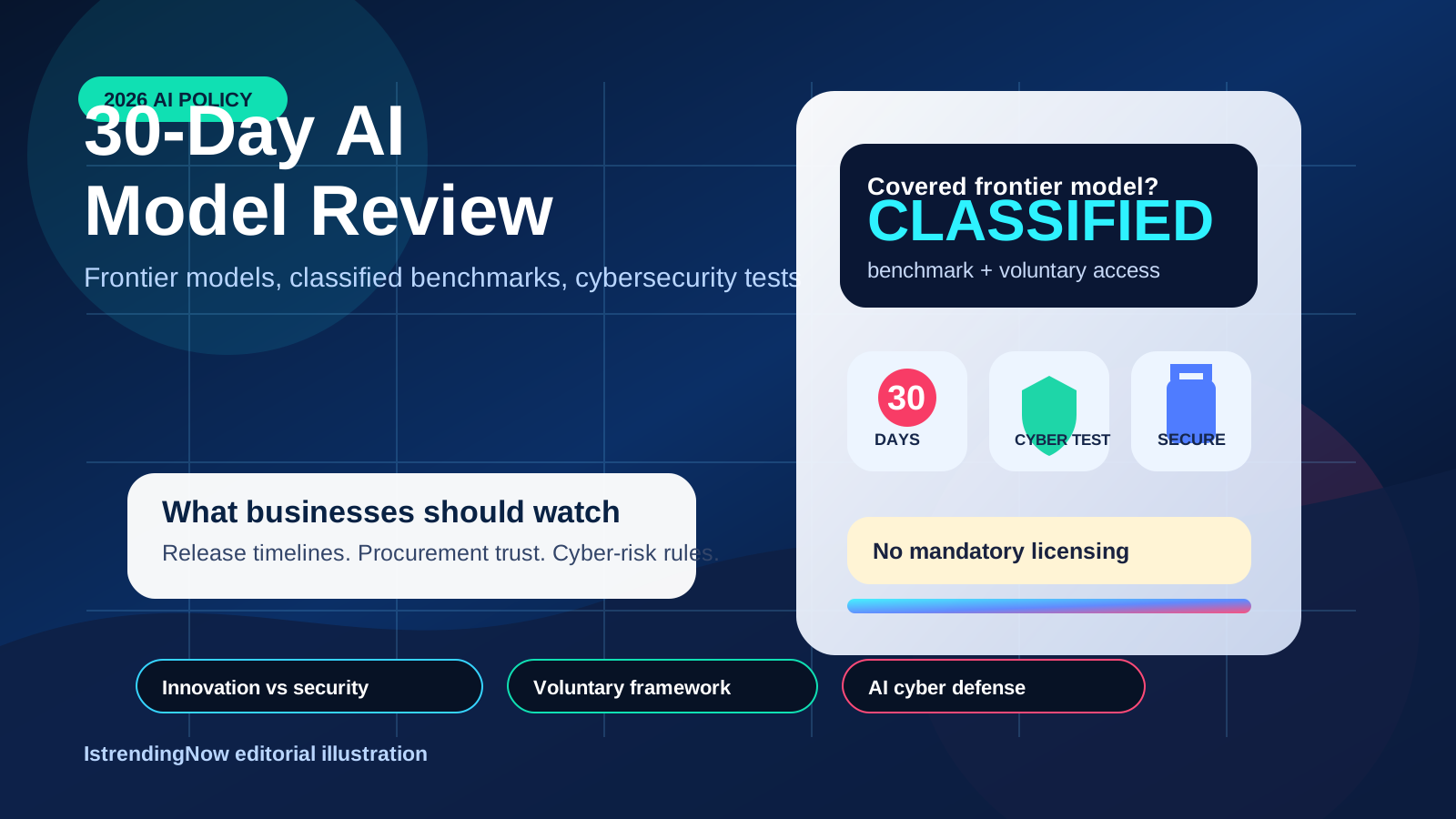
- Developers may voluntarily provide secure federal access to covered frontier models for up to 30 days before release to other trusted partners.
The new White House AI order is best understood as a cybersecurity visibility move. It does not ban frontier AI models, and it does not create a formal license that companies must obtain before releasing a model. Instead, it asks federal agencies to build a process for identifying the most cyber-capable AI systems and for testing them through a voluntary early-access framework.
The official order says agencies including Treasury, NSA, CISA and NIST should develop a classified benchmarking process within 60 days. That benchmark is meant to assess advanced cyber capabilities and decide when an AI system should be treated as a “covered frontier model” for the purposes of the order.
What changed?
The biggest practical change is the idea of secure early access. Under the voluntary framework, AI developers would provide the federal government with access to covered frontier models, under confidentiality and cybersecurity protections, for up to 30 days before they plan to release those models to other trusted partners.
That matters because the government is trying to understand whether the most capable models can accelerate vulnerability discovery, cyber operations or defensive security work. The same capability can be useful for defenders and dangerous if misused.
The plain-English takeaway
This is not a full AI licensing regime. It is a voluntary national-security review lane for frontier models that may have serious cyber capability.
Who is affected?
The direct audience is leading AI developers building frontier models. But the indirect audience is much wider: cloud providers, cybersecurity vendors, federal contractors, critical-infrastructure operators and large companies that buy or deploy advanced AI systems.
For businesses, the question is not only “Is this model powerful?” The new question is becoming: “Was this model tested, benchmarked or reviewed for advanced cyber risk before we depend on it?”
Why the order is careful about licensing
The order explicitly avoids creating a mandatory government licensing or preclearance system for AI model development or release. That detail is important because U.S. policy is trying to balance two competing goals: move fast enough to keep AI leadership, but watch cyber-capable systems closely enough to protect national security.
Reporting from AP and technology outlets described the order as narrower than earlier drafts that would have imposed a longer review period or stronger oversight. That makes the final version more industry-friendly, but also raises questions about whether voluntary participation will be enough if risks increase.
What businesses should watch next
- Benchmark rules: The classified threshold for a “covered frontier model” will shape which systems fall into the review lane.
- Vendor claims: AI vendors may start using government testing or trusted access as a security signal in enterprise sales.
- Release timing: Frontier developers may need to plan for a review window before partner rollouts.
- Cybersecurity clearinghouse: The order also points toward federal coordination on AI-discovered vulnerabilities.
What happens next
The next major checkpoint is the agency work due within 60 days of the order. Watch for how NIST, CISA and NSA define the benchmark process, how much public guidance businesses receive, and whether leading AI labs publicly commit to the voluntary access framework.
Why it matters
- AI cyber capability is becoming a national-security issue, not only a product feature.
- Enterprises may begin asking whether advanced models were independently tested before deployment.
- The policy could influence how other countries handle frontier AI reviews.